
Inshore Fishing Quepos Costa Rica
Quepos, Costa Rica, is one of the most exciting fishing destinations on the Pacific coast. Located near Manuel Antonio National Park, this popular fishing town is famous for its productive waters, abundant marine life, and easy access to some of the best inshore fishing grounds in the country.
While Quepos is internationally recognized for offshore sport fishing and its opportunities to catch marlin, sailfish, and tuna, the inshore fishing experience is equally exciting. Anglers looking for roosterfish, snapper, grouper, jack crevalle, mackerel, and other coastal species will find plenty of opportunities just offshore.
Inshore fishing Quepos Costa Rica is an excellent option for experienced anglers, families, couples, and visitors who want an exciting fishing adventure without necessarily spending an entire day far offshore. Depending on the boat, fishing conditions, and target species, anglers can choose between half-day, 3/4-day, and full-day fishing charters.
Most fishing trips depart from Marina Pez Vela in Quepos, a modern marina that provides convenient access to the Pacific Ocean. From the marina, fishing boats can reach productive reefs, rocky structures, coastal points, islands, and deeper nearshore waters where many popular sport fish feed.
Whether you are interested in catching and releasing a powerful roosterfish, targeting large Pacific snapper around underwater structures, or spending a full day exploring different fishing grounds, Quepos offers an inshore fishing experience worth considering.
This guide explains what to expect from inshore fishing charters in Quepos, including the fishing boats, trip durations, target species, fishing methods, and the advantages of choosing different charter lengths.
What Is Inshore Fishing in Quepos Costa Rica?
Inshore fishing generally refers to fishing relatively close to the coastline rather than traveling far offshore into deep ocean waters. In Quepos, inshore fishing takes place around rocky points, reefs, underwater structures, islands, coastal drop-offs, and other productive areas where predatory fish hunt.
Unlike offshore fishing, where anglers often spend considerable time traveling to distant fishing grounds in search of pelagic species, inshore fishing usually focuses on coastal species that live and feed around reefs and structures.
The Pacific coastline around Quepos offers a diverse underwater environment. Rocky formations, reefs, changing depths, and baitfish concentrations create excellent feeding grounds for several popular game fish.
One of the biggest attractions of inshore fishing is the variety of species that anglers can encounter during a single trip. Depending on the season and conditions, it is possible to catch roosterfish, cubera snapper, yellowtail snapper, amberjack, grouper, jack crevalle, Spanish mackerel, and other species.
Inshore fishing can also be physically exciting. Some species, particularly roosterfish, are known for powerful runs and aggressive strikes. Others, such as large cubera snapper, are famous for their strength and ability to dive immediately toward underwater structures after taking the bait.
For visitors staying in Manuel Antonio, Quepos, or nearby beach communities, departing from Marina Pez Vela makes it convenient to enjoy a productive fishing trip without traveling to another fishing destination.
Fishing Boats Used for Inshore Fishing Charters in Quepos
The fishing boat is an important part of the overall charter experience. In Quepos, inshore fishing trips operate on different types and sizes of sport fishing boats, depending on the charter, the number of passengers, and the fishing grounds being visited.
Many inshore fishing charters use professionally equipped sport fishing boats designed for comfort, safety, and performance in Pacific coastal waters.
26-to 36-Foot Sport Fishing Boats
Boats in the 30- to 36-foot range are popular choices for inshore fishing because they offer a good combination of stability, fishing space, and maneuverability.
These boats are generally large enough to accommodate small groups while providing enough deck space for anglers to fish comfortably.
A 36-foot Bertram-style sport fishing boat, for example, can be an excellent platform for a private inshore fishing charter. Boats in this category commonly feature:
- Spacious fishing decks with room for multiple anglers.
- Comfortable seating for passengers.
- Twin-engine configurations on many models.
- Fishing rod holders and professional tackle storage.
- Live bait tanks on suitably equipped vessels.
- Fighting chairs or open fishing areas, depending on configuration.
- Shade-covered seating areas.
- Navigation and communication equipment.
- Fish-finding electronics and GPS.
- Onboard coolers for drinks and refreshments.
The exact equipment and amenities depend on the individual vessel.
One advantage of fishing from a boat in this size range is the ability to move between different fishing locations throughout the trip. If the captain finds that one reef or coastal area is not producing bites, the boat can relocate to another promising fishing spot.
Larger Sport Fishing Boats
Some anglers prefer larger sport fishing boats, especially when traveling with families or groups who appreciate additional space and comfort.
Larger vessels may offer more room in the cockpit, additional seating, enclosed cabins, private bathrooms, and other amenities.
Although larger boats can be used for inshore fishing, the most important consideration is not simply the size of the vessel. The captain’s experience, knowledge of local fishing grounds, equipment, and ability to locate fish are equally important.
What Makes a Good Inshore Fishing Boat?
A good inshore fishing boat should provide a stable fishing platform, reliable engines, appropriate tackle, and the equipment needed for the intended fishing techniques.
It should also have enough space for anglers to move around safely when fighting fish.
Before booking, it is worth asking about the specific boat, passenger capacity, available fishing equipment, live bait arrangements, and onboard amenities.
Half Day Inshore Fishing Quepos Costa Rica
Best for shorter fishing trips
Half day inshore fishing Quepos Costa Rica is an excellent option for visitors who want to experience Pacific sport fishing without dedicating an entire day to the activity.
A typical half-day charter lasts approximately four hours. Departure times are commonly arranged for the morning, although afternoon departures may also be available depending on the boat, captain, and fishing conditions.
Morning trips are particularly popular because they allow anglers to get on the water early, when many predatory fish are actively feeding.
During a half-day trip, the captain will generally select fishing locations based on recent reports, weather, tides, baitfish activity, and the species anglers want to target.
Depending on conditions, the boat may visit rocky points, reefs, coastal structures, and other productive inshore fishing areas.
What Can You Catch on a Half-Day Charter?
A half-day trip can provide opportunities to target several popular inshore species, including:
- Roosterfish
- Pacific cubera snapper
- Yellowtail snapper
- Jack crevalle
- Spanish mackerel
- Grouper
- Amberjack
The actual species available will depend on the time of year, water conditions, and fishing location.
A four-hour trip is particularly attractive for families with children, first-time anglers, and travelers who want to combine fishing with other activities in Manuel Antonio or Quepos.
Although the fishing time is shorter, an experienced captain can make the most of the available hours by focusing on productive locations and selecting appropriate techniques.
Half-day charters are also a good introduction for anglers who are unsure whether they want to spend an entire day fishing.
3/4 Day Inshore Fishing Quepos Costa Rica
A balance of fishing time and flexibility
3/4 day inshore fishing Quepos Costa Rica is an excellent middle-ground option for anglers who want more time on the water than a half-day charter provides but do not necessarily need a full-day excursion.
A typical 3/4-day fishing charter lasts approximately six hours.
The additional fishing time allows the captain to explore more locations, change fishing techniques, and spend longer targeting specific species.
For example, a captain may begin the morning looking for roosterfish around coastal points before moving toward deeper rocky structures to target snapper, grouper, or amberjack.
If the bite is slow in one location, there is more flexibility to relocate and try another fishing area.
Why Choose a 3/4-Day Charter?
One of the biggest advantages is having additional time to explore the productive inshore waters around Quepos.
Some fishing locations may require longer travel times, particularly when conditions make certain areas more productive than others.
With approximately six hours available, anglers have more flexibility to fish several different locations without feeling as rushed.
A 3/4-day charter is especially appealing to anglers who have some fishing experience and want to maximize their opportunities to catch multiple species.
It is also a good option for visitors who want a substantial fishing adventure while leaving part of the day available for relaxing, sightseeing, or enjoying other activities.
Fishing Opportunities During a 3/4-Day Trip
Depending on the season and conditions, anglers may spend time:
- Casting artificial lures around rocky coastal points for roosterfish.
- Fishing live bait around reefs and underwater structures.
- Bottom fishing for snapper and grouper.
- Slow trolling live bait for larger predatory fish.
- Exploring different depths to locate active fish.
The captain can adjust the plan throughout the trip based on fish activity and the preferences of the anglers.
Full Day Inshore Fishing Quepos Costa Rica
Best for maximizing fishing opportunities
Full day inshore fishing Quepos Costa Rica is the ideal choice for anglers who want to dedicate an entire day to exploring the Pacific waters around Quepos.
A typical full-day inshore charter lasts approximately eight hours, although the exact schedule can vary depending on the boat and charter arrangement.
The biggest advantage of a full-day trip is the additional time available to explore multiple fishing grounds and target different species.
Rather than concentrating on one or two locations, the captain can develop a more flexible fishing plan based on the day’s conditions.
What Makes a Full-Day Inshore Charter Different?
An eight-hour trip provides more opportunities to experiment with fishing techniques, change locations, and pursue specific species.
For example, the morning may begin with surface fishing for roosterfish around rocky points. Later, the captain might move toward deeper reef structures to target cubera snapper, amberjack, or grouper.
If the fishing is productive, anglers can spend more time in an area where fish are actively feeding.
If the bite slows, the boat has additional time to explore alternative locations.
Full-day trips can also be especially rewarding for anglers interested in targeting larger fish. Some species require patience, the right bait presentation, and the ability to work specific structures.
Who Should Book a Full-Day Charter?
A full-day trip is particularly suitable for:
- Experienced anglers looking for more fishing time.
- Anglers hoping to target several different species.
- Families who enjoy spending time on the water.
- Groups who want a complete private fishing experience.
- Visitors who want to explore more of the coastal fishing grounds around Quepos.
If fishing is one of the main activities planned during your Costa Rica vacation, a full-day charter offers the greatest flexibility.
Full-Day Inshore Fishing: What Is the Duration?
A full-day inshore fishing charter generally lasts approximately eight to nine hours, depending on the boat and charter arrangement.
Unlike a full-day offshore trip, which may involve traveling considerably farther from the coastline, an inshore full-day charter can dedicate more of its time to fishing different coastal locations.
Before booking, confirm the exact departure and return schedule with the charter operator, as full-day inshore availability and trip lengths vary.
Most Popular Fish Species Targeted on Inshore Fishing Charters in Quepos
One of the most exciting aspects of inshore fishing Quepos Costa Rica is the variety of fish species found along the Pacific coastline.
Different species inhabit different underwater environments. Some prefer shallow rocky areas, while others spend most of their time around deeper reefs and underwater structures.
Here are some of the most popular species anglers target.
1. Roosterfish
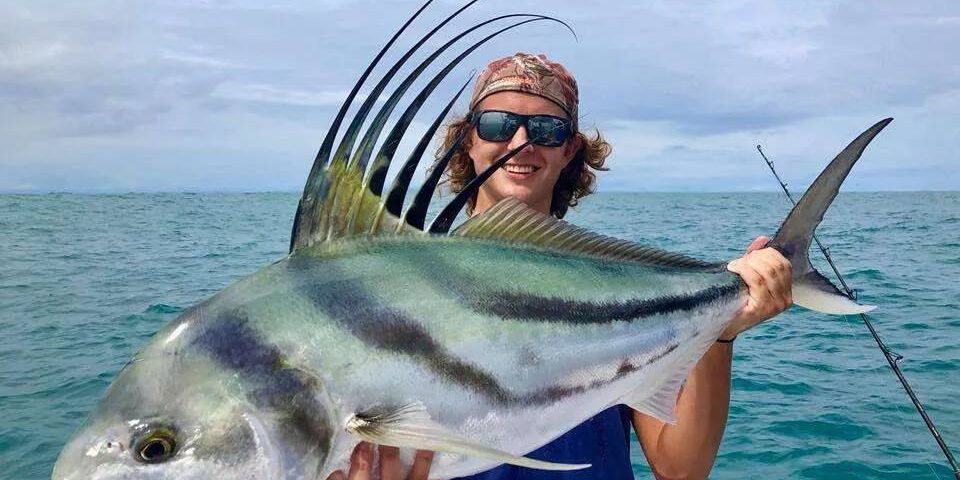
Roosterfish are among the most recognizable and sought-after inshore game fish in Costa Rica.
They are famous for their distinctive dorsal fin, which features several long, comb-like rays resembling a rooster’s crown.
Roosterfish are powerful predators that often hunt near beaches, rocky points, and coastal structures. They feed on smaller baitfish and can be particularly aggressive when actively feeding.
One of the most exciting ways to catch roosterfish is with live bait. Sardines, small jacks, and other baitfish can be presented near areas where roosterfish are known to hunt.
They can also be caught using artificial lures, including poppers, surface plugs, and swimming baits.
When a roosterfish takes the bait, anglers can experience powerful runs and a challenging fight. Larger specimens can put considerable pressure on fishing tackle.
Roosterfish are generally targeted for sport and are best released after a photograph.
2. Cubera Snapper
Cubera snapper are among the strongest fish encountered during inshore fishing trips in Quepos.
These powerful predators are known for their large mouths, strong jaws, and ability to dive toward underwater structures immediately after taking the bait.
Cubera snapper commonly inhabit rocky reefs, submerged formations, and deeper coastal structures.
Fishing for cubera snapper often involves presenting live bait or large dead baits close to the bottom. Heavy tackle is important because anglers need enough stopping power to prevent these fish from reaching the rocks.
Some captains also use large jigs and other artificial presentations around productive structures.
Landing a large cubera snapper is a memorable accomplishment, particularly because of the strength and determination these fish display during the fight.
3. Red Snapper
Red snapper are another popular target on inshore fishing charters.
They are commonly found around reefs, rocky bottoms, and underwater structures where they feed on smaller fish, crustaceans, and other marine organisms.
Bottom fishing is one of the most effective ways to target red snapper.
The crew may use cut bait, live bait, or other natural presentations positioned near the bottom.
Red snapper can provide excellent action for anglers of different experience levels. They are also appreciated as table fish, subject to applicable fishing regulations and responsible catch limits.
4. Jack Crevalle
Jack crevalle are aggressive predators known for their speed, strength, and powerful fighting ability.
They often travel in schools and feed on baitfish near beaches, river mouths, rocky points, and other coastal areas.
These fish are particularly exciting when caught using lighter spinning tackle.
Artificial lures, live bait, and slow-trolled baitfish can all be effective depending on where the fish are feeding.
Although jack crevalle are not always the primary target of an inshore charter, encountering a school can provide some of the most action-packed moments of the day.
5. Spanish Mackerel
Spanish mackerel, also known locally as sierra, are fast-moving predators that inhabit the coastal waters of Costa Rica.
They have streamlined bodies, sharp teeth, and impressive speed.
Mackerel often feed on schools of smaller baitfish, making them excellent targets for anglers using light tackle.
They can be caught through trolling, casting small artificial lures, and jigging.
Because of their speed and aggressive feeding behavior, mackerel can provide consistent action during productive fishing conditions.
6. Grouper
Several types of grouper inhabit the Pacific waters around Quepos.
These fish are generally associated with reefs, rocky formations, and other underwater structures.
Groupers are ambush predators that frequently remain close to the bottom, waiting for smaller fish and other prey to pass nearby.
Live bait and bottom fishing techniques are commonly used to target them.
When hooked, larger groupers often attempt to return to their underwater hiding places, creating a challenging fight for anglers.
7. Snook
Snook are another exciting coastal species that may be targeted on specialized inshore trips around Quepos.
They are frequently associated with river mouths, estuaries, beaches, and areas where freshwater meets the ocean.
Snook are ambush predators and often feed around structures, submerged branches, and changes in water depth.
Live bait and artificial lures can both be effective.
Fishing for snook requires patience and an understanding of tides, currents, and baitfish movement. Experienced local captains often pay close attention to these conditions when planning a trip.
Not every charter will specifically target snook, so anglers interested in catching them should communicate this preference before departure.
Fishing Methods Used on Inshore Fishing Charters in Quepos
Inshore fishing around Quepos involves several techniques. The captain generally chooses the fishing method according to the target species, location, water depth, current, and baitfish activity.
Some charters may use several different techniques during the same trip.
Live Bait Fishing
Live bait fishing is one of the most productive techniques for targeting larger inshore predators.
The crew may catch or obtain live bait before heading toward the primary fishing locations.
Common baitfish include sardines, blue runners, and other locally available species.
Live bait can be presented near rocky points, reef edges, beaches, and areas where predatory fish are actively feeding.
This technique is particularly effective for roosterfish, snapper, and jack crevalle.
One of the biggest advantages of live bait is its natural movement in the water. Predatory fish are attracted to the movement and vibrations of live baitfish, making this presentation particularly appealing.
Slow Trolling
Slow trolling involves moving the fishing boat at a controlled speed while presenting bait behind the vessel.
This allows the captain to cover productive sections of coastline while keeping the bait moving naturally through the water.
Slow trolling with live bait is commonly used to target roosterfish, larger jacks, and other coastal predators.
The captain can adjust the trolling speed and bait placement depending on the species being targeted and the water conditions.
Bottom Fishing
Bottom fishing is particularly effective when targeting snapper and grouper.
The boat positions itself near reefs, rocky formations, or underwater structures where these fish are known to feed.
Anglers lower baited hooks toward the bottom and wait for a strike.
This technique can produce powerful bites, particularly when targeting larger cubera snapper.
Using the correct weight is important because the bait needs to reach the desired depth while remaining manageable in the current.
Jigging
Jigging involves lowering an artificial metal lure toward the bottom and retrieving it using repeated lifting and dropping movements.
The movement imitates an injured or fleeing baitfish.
Vertical jigging can be productive around deeper reefs and underwater structures where snapper, grouper, and amberjack may be feeding.
It is an active fishing technique that allows anglers to participate directly in presenting the lure and detecting strikes.
Casting Artificial Lures
Casting artificial lures is another exciting option, particularly when targeting roosterfish and jack crevalle.
Anglers may use:
- Surface poppers.
- Stickbaits.
- Swimming plugs.
- Soft plastic swimbaits.
- Metal casting lures.
Surface fishing can be particularly exciting because anglers sometimes see the fish attacking the lure.
A roosterfish chasing a surface popper can create an unforgettable fishing experience.
Artificial lure fishing is also a good choice for anglers who enjoy actively casting and retrieving rather than waiting for a fish to take stationary bait.
Where Do Inshore Fishing Charters Go From Marina Pez Vela?
Marina Pez Vela provides convenient access to several productive coastal fishing environments.
Depending on the captain’s plan, the boat may explore areas around Quepos, Manuel Antonio, nearby beaches, rocky points, and coastal reefs.
The exact fishing locations are not fixed. Captains consider several factors before deciding where to fish.
These include:
- Ocean conditions and swell.
- Tide changes.
- Water temperature.
- Baitfish concentrations.
- Recent fishing activity.
- The species anglers want to target.
- Wind and current conditions.
River mouths and estuaries can also be productive environments, particularly when targeting snook and other coastal predators.
The ability to move between different types of fishing grounds is one of the biggest advantages of booking a private inshore charter.
What Is the Best Time of Year for Inshore Fishing in Quepos?
Quepos offers inshore fishing opportunities throughout the year. However, fishing conditions and the availability of particular species can change with the seasons.
Roosterfish, snapper, jack crevalle, mackerel, and grouper are among the species that anglers may encounter during different months.
The dry season, generally from December through April, often brings favorable weather and excellent conditions for spending time on the water.
The green season, typically from May through November, can also provide productive fishing. Changing rainfall patterns, river conditions, water clarity, and baitfish movements can influence where fish are feeding.
Rather than assuming one month guarantees the best fishing, it is better to ask the captain about recent catches and conditions for your travel dates.
A knowledgeable local captain can adjust the fishing plan to the conditions encountered on the day.
What Is Included in an Inshore Fishing Charter?
Most private inshore fishing charters departing from Marina Pez Vela include the essential equipment and services needed for a successful day on the water.
Although inclusions vary between boats and operators, typical charter amenities include:
- Professional captain and fishing crew.
- Fishing rods and reels.
- Appropriate fishing tackle and terminal equipment.
- Bait, subject to availability and charter arrangements.
- Fish-finding electronics and navigation equipment.
- Safety equipment and life jackets.
- Ice and coolers.
- Drinking water and soft drinks.
- Snacks and fresh fruit.
- Lunch on many full-day charters.
Some boats also offer additional amenities such as private bathrooms, shaded seating areas, cabins, and more extensive food and beverage services.
Before booking, confirm whether fishing licenses, gratuities, lunch, and alcoholic beverages are included.
A Costa Rican fishing license is generally required for recreational fishing. Your charter operator can explain the current licensing requirements and how to obtain one.
Which Inshore Fishing Charter Should You Choose?
Choosing the right charter depends on your fishing experience, available vacation time, and the species you hope to catch.
Here is a simple comparison of the three options.
|
Charter |
Approximate duration |
Best suited for |
|
Half day |
4–5 hours |
Families, beginners, shorter trips |
|
3/4 day |
6–7 hours |
Anglers wanting more fishing time |
|
Full day |
8–9 hours |
Serious anglers and extended fishing adventures |
Half-day inshore fishing: Choose this option if you want to experience fishing in Quepos without spending most of the day on a boat. It is a particularly good choice for families with younger children.
3/4-day inshore fishing: This is an excellent balance between fishing time and flexibility. The additional hours provide more opportunities to explore different locations and pursue multiple species.
Full-day inshore fishing: If fishing is one of the main reasons for visiting Costa Rica, a full-day trip offers the most flexibility. You can spend more time exploring productive fishing grounds and experimenting with different fishing methods.
Tips for Getting the Most Out of Your Quepos Inshore Fishing Charter
A little preparation can make your fishing experience more enjoyable.
1. Book an experienced local captain.
Local knowledge is extremely important when fishing around Quepos. An experienced captain understands the coastline, tides, underwater structures, and seasonal movements of different fish species.
2. Tell the captain which fish you want to catch.
If your main goal is catching roosterfish, cubera snapper, or snook, communicate that before the trip. This helps the captain plan the fishing locations and techniques.
3. Choose the right trip duration.
Consider how much time you want to spend fishing. A four-hour trip is a great introduction, while a six- or eight-hour charter provides additional flexibility.
4. Bring appropriate clothing.
Wear lightweight clothing, polarized sunglasses, a comfortable hat, and sunscreen. Quick-drying clothing is recommended because you may get splashed while fishing.
5. Follow the crew’s instructions.
Whether you are an experienced angler or fishing for the first time, listen to the captain and mate. They can help you handle the equipment, present the bait, and fight fish properly.
6. Be flexible with fishing conditions.
Fishing is not an exact science. Tides, weather, currents, and baitfish activity can change throughout the day. Sometimes the best approach is to move to a different location or change techniques.
Frequently Asked Questions About Inshore Fishing Quepos Costa Rica
How long is a half-day inshore fishing charter in Quepos?
A half-day inshore fishing charter generally lasts approximately four to five hours. Morning and afternoon departures may be available, depending on the boat and operator.
How long is a 3/4-day inshore fishing charter?
A 3/4-day inshore fishing charter typically lasts six to seven hours. This gives anglers additional time to explore different coastal fishing locations and target multiple species.
How long is a full-day inshore fishing charter in Quepos?
A full-day inshore fishing charter generally lasts approximately eight to nine hours, although the exact duration depends on the charter arrangement.
Where do inshore fishing charters depart from in Quepos?
Most of the fishing charters discussed in this guide depart from Marina Pez Vela, located in Quepos, Costa Rica.
The marina provides convenient access to the Pacific coastline and nearby fishing grounds.
What is the best fish to catch on an inshore fishing charter?
Roosterfish are among the most popular inshore game fish in Quepos because of their distinctive appearance and powerful fighting ability.
Other popular targets include cubera snapper, red snapper, jack crevalle, grouper, mackerel, and snook.
Can beginners go inshore fishing in Quepos?
Absolutely! Inshore fishing is suitable for beginners and experienced anglers.
The captain and mate can explain how to use the fishing equipment, handle the bait, and fight fish. Families with children can also enjoy private inshore fishing charters.
Is inshore fishing better than offshore fishing in Quepos?
Neither is necessarily better. They offer different fishing experiences.
Inshore fishing focuses on coastal species such as roosterfish, snapper, grouper, and jack crevalle. Offshore fishing focuses on pelagic species such as sailfish, marlin, yellowfin tuna, and mahi-mahi.
Inshore fishing is generally a better choice for anglers who want to remain closer to the coastline and target coastal game fish.
Can you keep the fish you catch?
Some species may be kept for consumption when permitted by applicable fishing regulations. However, responsible catch-and-release practices are encouraged, particularly for prized sport fish such as roosterfish.
Ask the captain about local regulations, size restrictions, and which species are appropriate to keep.
Is Marina Pez Vela a good departure point for inshore fishing?
Yes. Marina Pez Vela is a convenient departure point for fishing trips in Quepos. Its location provides access to the coastal waters around Quepos and Manuel Antonio, making it an excellent starting point for inshore sport fishing.
Book an Inshore Fishing Adventure in Quepos Costa Rica
Whether you are an experienced sport fisherman or planning your first fishing adventure, inshore fishing Quepos Costa Rica offers an exciting opportunity to explore the Pacific coastline and experience some of the country’s most popular coastal game fish.
With departures from Marina Pez Vela, anglers have access to professional fishing boats, experienced captains, and productive fishing grounds around Quepos and Manuel Antonio.
The half-day charter is ideal for visitors with limited time, while the 3/4-day option provides additional opportunities to explore the coastline and pursue different species. For anglers who want to spend as much time as possible fishing, a full-day charter offers the greatest flexibility.
From the powerful runs of roosterfish to the challenging fights of cubera snapper and grouper, every trip offers the possibility of an unforgettable catch.
If you are planning a fishing vacation in Costa Rica, consider adding an inshore fishing charter from Marina Pez Vela to your itinerary. It is an excellent way to experience the incredible marine life of the Pacific coast and enjoy a memorable day fishing in Quepos.